Ottawa County Municipal Court serves as the primary forum for handling city ordinance violations and local citations. This court oversees matters such as traffic tickets, parking violations, and municipal code infractions. Residents rely on the court to ensure fair hearings and consistent enforcement of local laws. Its role is essential for maintaining order and addressing minor legal disputes within the community.
Municipal Court Ottawa County Court also manages cases involving property maintenance, noise complaints, and other city code violations. By providing clear legal procedures, the court allows residents to resolve disputes efficiently. Defendants receive notifications of hearings and can present evidence before a judge. The court emphasizes accessible and straightforward processes to ensure everyone understands their responsibilities under city law.
How to Search Municipal Court Records
Searching Ottawa County Municipal Court records lets people check case details, citations, court hearing dates, and current status. Individuals can find these public records using an official online search portal or by visiting the court clerk’s office during business hours.
Official Case Search URL
Use the official municipal court search portal at:
https://www.ottawacountymunicipalcourt.com/search.php
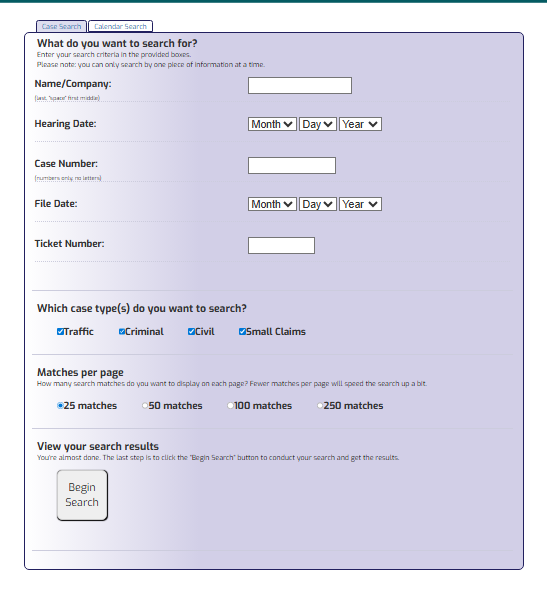
Go to the Official Search Page
- Open a web browser on a computer or mobile device.
- Enter https://www.ottawacountymunicipalcourt.com/search.php in the address bar.
- Press Enter to load the Ottawa County Municipal Court Record Search page.
Accept Terms and Continue
- The search page displays a terms and disclaimer screen.
- Read the notice about data accuracy and legal disclaimer.
- Click Continue to reach the search interface.
Choose Search Criteria
The search tool generally offers one or more ways to find records. Common options include:
- Case Number: Enter a specific case or docket number to find exact case results.
- Name Search: Use a defendant’s last name and first name to locate all matching municipal cases.
- Citation Number: If you have a citation, enter that number for a direct result.
Enter Required Information
- Type the search term with correct spelling.
- If using a name search, enter at least the last name.
- For a precise match, include additional identifiers if available.
Submit the Search
- Click the Search button once information is entered.
- The system will process your request and return matching records.
Review Results
Search results may include:
- Case Number
- Case Type / Offense
- Defendant Name
- Hearing Dates
- Status (open, closed, resolved)
- Citation details and fines
Save or Print
- Users can print the screen or save it as a PDF for their records.
- Use the browser’s print function (usually “Print” or Ctrl+P) to create a hard copy.
What You Can Find in the Results
The online search output typically includes key data points like:
- Hearing schedules
- Offense descriptions
- Case status (open, closed, pending)
- Monetary fines or cost details
- Last recorded action on a case
What If You Can’t Find a Record Online?
Sometimes a record may not appear online due to:
- Recent filing delays in the system
- Sealed or restricted records
- Technical errors
If you cannot locate a case online, try these steps:
- Visit the Municipal Court Office in person.
- Bring as much identifying information as possible (case number, citation, full name).
- Request assistance from the clerk’s office staff.
In‑Person Search at the Court
If online search doesn’t yield results:
- Visit the Ottawa County Municipal Court clerk’s office during business hours.
- Provide the court clerk with the case or citation number, or the full name of the person involved.
- Staff can retrieve physical or electronic records from internal systems, confirm hearing dates, or print official copies.
What is Ottawa County Municipal Court
Ottawa County Municipal Court is a local court that handles minor legal matters within the county. It primarily enforces city ordinances and resolves cases that fall under municipal jurisdiction.
Municipal courts in Ottawa County serve as the city’s legal authority for minor offenses and violations. Unlike higher courts, these courts do not handle major criminal cases or complex civil disputes. Their jurisdiction focuses on local ordinance enforcement, traffic violations, and small-scale legal matters that directly affect the community.
Jurisdiction and Responsibilities
The Ottawa County Municipal Court has the authority to hear cases that involve violations of city codes, municipal ordinances, and minor infractions. Examples include:
- Traffic violations: Speeding tickets, parking violations, and license issues.
- Public disturbances: Noise complaints, local nuisance cases, and minor property disputes.
- Code enforcement: Violations of building codes, zoning regulations, or safety standards.
Common Types of Cases in Municipal Court
Ottawa County Municipal Court and the district court handle a variety of cases related to city violations, local citations, and code enforcement. These courts focus on minor legal matters that directly affect community safety, public order, and adherence to city regulations. Residents and business owners often interact with the courts to resolve issues efficiently without involving higher-level courts.
Traffic and Parking Violations
One of the most common types of cases in municipal court involves traffic and parking violations. These include:
- Speeding and moving violations – Tickets issued for exceeding speed limits or failing to obey traffic signals.
- Parking infractions – Fines for parking in restricted areas, expired meters, or blocking fire lanes.
- Driver documentation issues – Cases related to expired licenses, vehicle registration, or insurance compliance.
Building, Zoning, and Noise Violations
Municipal courts also enforce local ordinances related to property and community standards. Common examples include:
- Building and zoning violations – Issues like unpermitted construction, improper land use, or failure to meet city building codes.
- Noise complaints – Reports of loud music, construction disturbances outside permitted hours, or other nuisances that affect residents’ quality of life.
- Property maintenance infractions – Overgrown lawns, unsafe structures, or debris violations under city ordinances.
Other Municipal Code Infractions
Beyond traffic and property-related issues, municipal courts handle a variety of other civil and minor criminal infractions, including:
- Animal control violations – Cases for stray animals, licensing issues, or dangerous pets.
- Business-related infractions – Unlicensed operations, health code violations, or local permit issues.
- Public safety concerns – Littering, minor theft, or other misdemeanor-level offenses covered by municipal ordinances.
How to File or Respond to a Municipal Court Case
Responding to a municipal citation in Ottawa County Municipal Court is a straightforward process, but it requires attention to deadlines and proper procedures. Residents can either pay the fine, request a hearing, or dispute the citation, depending on their situation.
Instructions to Respond to a Citation
When a resident receives a citation, the first step is to carefully review the notice. It typically includes the violation type, court date, and response deadline. The following steps outline the standard process:
- Check the citation details – Verify the accuracy of your personal information, violation type, and the listed fine amount.
- Decide how to respond – Options usually include:
- Paying the fine: This resolves the matter without appearing in court.
- Requesting a hearing: If disputing the ticket or seeking a reduced penalty.
- Choose a response method – Residents can respond online, by mail, or in person at the municipal court office. Online payments and filing often include step-by-step prompts.
- Submit your response – Ensure that the response reaches the court before the deadline indicated on the citation. Late responses may result in additional fines or legal consequences.
Filing Disputes and Requesting Hearings
If disputing a citation, residents must formally request a hearing. This typically involves:
- Completing a dispute form available on the Ottawa County Municipal Court website or at the court office.
- Providing supporting documentation, such as photos or witness statements.
- Scheduling a hearing date, either in person or virtually, depending on the court’s options.
Online vs In-Person Options
Ottawa County Municipal Court provides flexible options for responding to citations:
- Online Portal: Many minor citations can be addressed through the official Citation Payment & Filing Portal, allowing residents to pay fines or submit disputes electronically.
- In-Person Filing: Residents may visit the municipal court to submit forms, pay fines, or discuss cases directly with court staff.
- Mail Submission: Some filings can also be sent by mail, with postmarked dates serving as proof of timely submission.
Timeline and Deadlines
Adhering to deadlines is crucial in municipal court cases. Typically, citations must be addressed within 10–30 days of issuance, depending on the violation type. Missing this window can lead to:
- Additional late fees
- Default judgments
- Potential holds on driver’s licenses or vehicle registration
Court Procedures and What to Expect
Attending municipal court in Ottawa County, also known as an ordinance court, involves a clear set of procedures designed to handle minor legal matters efficiently. Understanding the courtroom process helps residents prepare for hearings and approach their cases with confidence.
Preparing for Hearings
Before appearing in municipal court, it is important to review the citation or notice carefully. This document outlines the violation, scheduled hearing date, and any instructions for responding. Key steps for preparation include:
- Organize documentation – Collect any evidence, photographs, receipts, or witness statements that support your case.
- Understand the violation – Review the specific city ordinance or code cited in your case to clarify what is being disputed.
- Plan your presentation – Be ready to explain your situation clearly and concisely to the judge or magistrate.
Courtroom Etiquette
During the hearing, residents should follow basic courtroom etiquette:
- Address the judge properly – Use formal titles, such as “Your Honor.”
- Speak clearly and politely – Avoid interruptions and stay focused on facts.
- Follow procedural instructions – Listen to the judge or clerk for guidance on when to speak or submit documents.
Possible Outcomes and Penalties
After reviewing the case, the court may issue various outcomes depending on the circumstances:
- Fines and fees – Monetary penalties for violations such as traffic tickets, code infractions, or minor offenses.
- Community service or corrective actions – In some cases, the court may require steps to remedy the violation, like property cleanup or code compliance corrections.
- Dismissals or reductions – If evidence supports the resident’s case, charges or fines may be reduced or dismissed entirely.
Case Scheduling
Municipal courts handle numerous minor violations daily, so hearing dates are scheduled in advance. Residents may be given options to:
- Attend on the scheduled date in person
- Request rescheduling if there is a valid conflict
- Participate via online or virtual hearings, depending on court policy
Fines, Penalties, and Payment Options
Municipal courts in Ottawa County handle local citations and code enforcement cases, often resulting in fines or other penalties. Understanding the possible consequences and available payment methods helps residents comply efficiently and avoid additional fees.
Common Fines and Penalties
Violations handled by municipal courts can carry different types of penalties, depending on the offense:
- Traffic and parking tickets – Fines vary by the severity of the violation, such as speeding, expired registration, or illegal parking.
- Code enforcement violations – Penalties for zoning, building, or property maintenance infractions typically involve civil fines and may include corrective actions.
- Minor ordinance violations – Noise complaints, animal control issues, or other local infractions may result in small monetary penalties or community service requirements.
Payment Methods
Ottawa County Municipal Court provides multiple options for paying fines:
- Online payments – Residents can pay quickly through the court’s official portal using a credit or debit card.
- In-person payments – Fines can be settled at the municipal court office during business hours.
- Mail-in payments – Residents may send a check or money order with citation details included.
Payment Plans and Reductions
For residents unable to pay fines in full, municipal courts may offer:
- Payment plans – Dividing the total fine into manageable installments over a set period.
- Fine reductions – In some cases, judges may reduce penalties based on financial hardship or prompt compliance with code requirements.
Location & Contact Information
Residents and visitors seeking Ottawa County Municipal Court services need clear details on the court location, contact information, and office access. Having this information ensures timely filings, court appearances, and efficient communication with court staff.
Court Address and Directions
The Ottawa County Municipal Court is located in Port Clinton, Ohio, serving the county efficiently. Key details include:
- Courthouse Address: 315 Madison Street, Port Clinton, OH 43452
- Directions:
- From I-75 North or South, take the OH-2 exit toward Port Clinton. Follow OH-2 East to Madison Street.
- From downtown Port Clinton, the courthouse is centrally located and well-signed.
- Parking Information: On-site parking is available for visitors, including designated handicapped spaces. Additional public street parking is nearby for convenience.
Contact Information
Efficient communication with municipal court staff is essential for inquiries, filings, or scheduling hearings. The court can be reached via:
- Phone: (419) 734-6777
- Email: [Insert official email if available]
- Office Hours: Monday–Friday, 8:00 AM – 4:30 PM
Frequently Asked Questions
This section addresses common questions about Ottawa County Municipal Court and handling municipal citations, providing clear guidance for residents seeking to resolve issues efficiently.
How do I check my municipal court case online?
Residents can access the status of their municipal court cases through the Ottawa County Municipal Court online portal. By entering a case number, citation number, or personal identifying details, users can view upcoming court dates, fines, payment status, and any official notices issued by the court. The portal provides a convenient alternative to visiting the courthouse in person, allowing users to monitor deadlines, confirm hearing times, and track the progress of disputes. It is important to ensure that all personal information entered matches the court records exactly, as discrepancies may prevent access to case details.
Can I dispute a citation without a lawyer?
Yes, residents have the option to dispute municipal citations without hiring a lawyer. The court allows individuals to request a hearing and present their case directly to the judge. Disputing a citation involves submitting any relevant documentation, such as photographs, witness statements, or receipts, to support the claim. While legal representation can offer guidance, it is not required, and many residents successfully resolve minor traffic, noise, or code enforcement violations independently. Understanding the specific ordinance cited in the violation, knowing the facts of the case, and presenting them clearly can significantly improve the likelihood of a favorable outcome.
How long does a municipal court case take?
The duration of cases in Ottawa County Municipal Court depends on the nature of the violation and the court’s schedule. Minor citations, including traffic tickets, parking violations, or code enforcement issues, are typically resolved within several weeks. More complex cases, such as disputes involving property violations, multiple witnesses, or repeated offenses, may extend for several months. The court aims to process matters efficiently while providing all parties sufficient time to present their case, submit documentation, and attend hearings. Delays can occur due to rescheduled hearings or high case volume, so residents are encouraged to monitor the online portal and maintain contact with court staff to stay informed about their case status.
What happens if I ignore a local citation?
Failing to respond to a municipal citation can have serious consequences. Ignoring a citation often results in additional fines, late fees, or penalties. In many cases, the court may enter a default judgment against the individual, which could affect credit records or trigger collections processes. For traffic-related violations, ignoring a citation may result in holds on driver’s licenses or vehicle registration, preventing renewal until the matter is resolved. Persistent noncompliance can escalate legal action, making it more costly and complicated to resolve. Responding promptly ensures that residents can contest charges, request hearings, or arrange payment plans without facing further complications.
Are municipal court records public?
Ottawa County Municipal Court records are generally available to the public. This includes details of case filings, hearing outcomes, fines, and other actions taken in municipal court. Residents can access many records online through the court portal or review them in person at the courthouse. However, certain sensitive information, such as records involving juveniles, ongoing investigations, or private personal data, may be restricted from public access. Public access ensures transparency in the municipal legal process while balancing the need for privacy in specific situations. Residents seeking historical case information or documentation may need to submit a formal records request to the court clerk’s office.